Long Friendships
The friend you only ever see in one particular place
Some friendships are tied to a location: a holiday town, a conference, a village you both return to. They are real, and they behave differently from the rest.
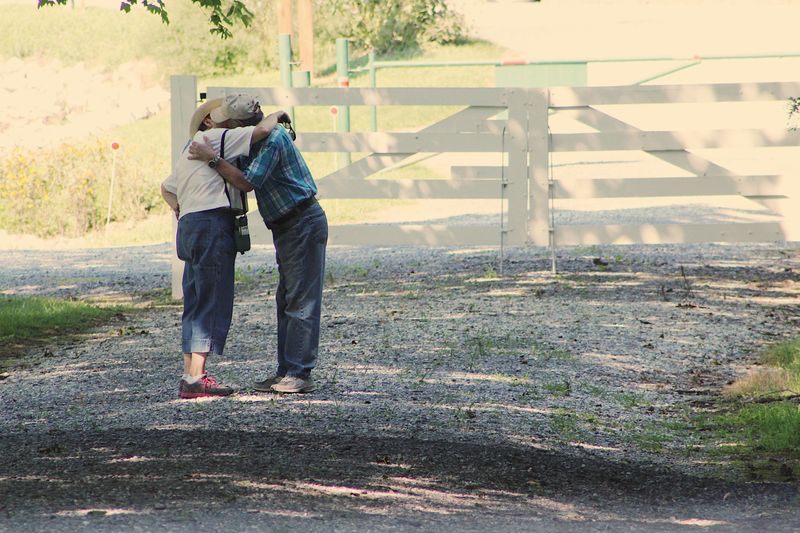
These are listed in the order worth acting on, which with friendships fixed to one location is not the order they are usually presented in.
What matters most
- Place-bound friendships resume instantly and rarely develop between meetings.
- The setting supplies the shared context that other friendships build over time.
- They usually end when one person stops going rather than through any falling-out.
How they form
Some friendships exist entirely within one location, whether that is a holiday town, a family village, an annual conference or a course that recurs. Both people arrive already removed from their ordinary obligations, which is why these relationships often become close unusually quickly.
The setting supplies context, so there is no need to explain who anybody is or why they are there, and conversation starts several stages in. Time is also concentrated, and several consecutive days together produces more contact than a year of meeting a local friend for dinner. The result is a friendship that can be genuinely deep while containing almost no knowledge of each other's actual daily lives.
Why they resume so easily
Place-bound friendships pick up immediately because the setting itself carries the continuity that other friendships have to generate through contact. Neither person has to be updated on the basics, since the shared frame of reference is the place and it has not changed much.
After a falling-out, there is also no accumulated obligation, because nothing happened in between and neither person failed to call anybody. That absence of maintenance is exactly what makes them restful, and many people describe these as the least effortful friendships they have. The same absence is what limits them, since a friendship with no contact between meetings cannot easily carry anything urgent.
What they are good for
Because the person is outside your ordinary life, they can be told things that would circulate if said to somebody closer to home. They also see you in a specific mode, usually a more relaxed one, which some people find is the version of themselves they most want to keep. Over years these friendships accumulate their own history, and a decade of annual meetings builds a record that is genuinely substantial.
They are frequently the friendships people describe as unchanged, precisely because they are only ever exercised in the same conditions. It is worth valuing them as their own category rather than measuring them against friendships that operate in daily life.
Trying to move them out of the place
Attempts to extend these friendships into ordinary life work sometimes and fail often, and the failure is usually informative rather than sad. Away from the setting there is no shared context, so the conversation has to be built from scratch by two people who barely know each other's circumstances. It is worth trying once, since some of these become full friendships and there is no way to know without attempting it.
The realistic test is whether you find two or three subjects that have nothing to do with the place. If the attempt is flat, that is not a verdict on the friendship, and returning it to the place where it works is a reasonable conclusion.
Keeping it alive between visits
Very little is needed, and one message before and after each visit is usually enough to keep the arrangement in place. Confirming the dates early matters most, since these friendships depend entirely on both people continuing to turn up.
A small amount of off-season contact, such as sending something related to the place, holds it without converting it into a different kind of friendship. It is worth having their actual contact details rather than relying on meeting them there, since that is the single point of failure. Where a group forms around a place, a shared thread used a few times a year keeps everybody's dates aligned without becoming a burden.
When one of you stops going
These friendships usually end because somebody's circumstances change and they stop returning, which nobody experiences as a decision about the friendship. The ending is often silent, since there is no mechanism for contact and neither person has ever needed one. Saying explicitly that you would like to stay in touch, and agreeing how, is the only thing that reliably prevents it.
Across a decade, some are worth converting at that point, and a friendship of ten summers has enough history to survive a change of setting if both people want it to. Others should be allowed to end, and remembering them as belonging to a place and a period is not a diminished version of what they were.
Everything above, in order of what to do first
- How they form. Some friendships exist entirely within one location, whether that is a holiday town, a family village, an annual conference or a course that recurs.
- Why they resume so easily. Place-bound friendships pick up immediately because the setting itself carries the continuity that other friendships have to generate through contact.
- What they are good for. Because the person is outside your ordinary life, they can be told things that would circulate if said to somebody closer to home.
- Trying to move them out of the place. Attempts to extend these friendships into ordinary life work sometimes and fail often, and the failure is usually informative rather than sad.
- Keeping it alive between visits. Very little is needed, and one message before and after each visit is usually enough to keep the arrangement in place.
- When one of you stops going. These friendships usually end because somebody's circumstances change and they stop returning, which nobody experiences as a decision about the friendship.
The takeaway
Get their actual contact details, because the friendship is one changed circumstance away from ending without anybody deciding to end it.
The apology that works is specific, unhurried and free of the word but.
Questions readers ask
Are holiday friendships real friendships?
Yes, and they are their own category. The setting supplies the context that other friendships build through contact, which is why they resume instantly and rarely develop in between.
Should I try to see them in ordinary life?
Try once. The test is whether you find two or three subjects unconnected to the place. If the attempt falls flat, returning it to where it works is a reasonable conclusion.