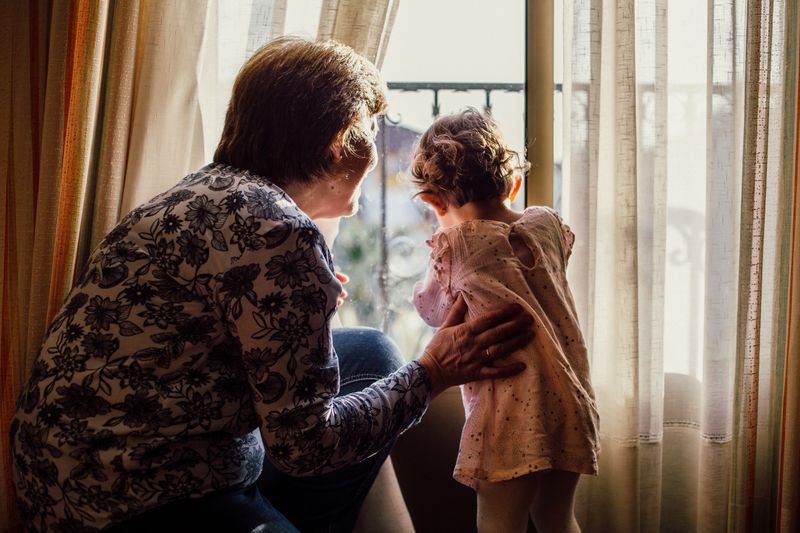
Family Ties
The role you were given at nine and still play at forty
Families assign jobs early: the responsible one, the difficult one, the funny one. Why those labels persist decades after they stopped describing anybody.

This is less a set of instructions about family roles assigned in childhood than an argument, and it is worth saying so at the start.
The argument in brief
- Family roles form as a practical shorthand and then stop being updated.
- Everyone else's role depends on yours, so changing it meets resistance.
- The label describes a position in a system, not a fact about your character.
How the labels get assigned
Families need shorthand, and a household under pressure will settle on a quick description of each child that makes daily life easier to run. The labels are often based on a genuine difference at the time, though a nine-year-old's temporary situation gets read as a permanent trait.
Once assigned, a label starts collecting evidence, because family members notice the behaviour that fits it and discount the behaviour that does not. Children also perform the role they are given, since the role comes with attention and a clear set of expectations to meet. By adolescence the description has become a fact about the family rather than an observation about a person.
Why nobody updates them
Family members mostly encounter each other in family settings, which are precisely the settings where the old behaviour is easiest to trigger. The label is also load-bearing for everyone else, since being the sensible one requires somebody else to be the chaotic one. Updating one description therefore requires updating several, and systems of any kind resist changes that force a general reorganisation.
There is rarely any occasion at which an adult child's actual life is examined in enough detail to challenge the story. Relatives who see you twice a year are working from a version of you that was last revised decades ago.
What it costs in adulthood
The most common cost is that a family cannot make use of what a person has actually become, which is a waste in both directions. Somebody who runs a department at work may still find nobody at a family gathering will let them decide where to eat.
The person labelled unreliable often stops being offered responsibility, then behaves accordingly, and the family reads that as confirmation. Roles also allocate duties, which is why the responsible sibling ends up with the care, the admin and the difficult phone calls by default. None of this is malicious, which is what makes it so difficult to raise as a grievance.
Why direct confrontation rarely works
Announcing that you are no longer the difficult one invites a debate about the past, which is a debate nobody wins. Family members will produce evidence, because thirty years of selective attention has generated a great deal of it. The conversation also puts them on the defensive, and defensive people restate the original position more firmly than before.
The unglamorous truth is that what tends to work better is behaving differently and letting the mismatch accumulate without commentary over several years.
Behaviour with no argument attached is much harder to file back under the old heading.
Changing the role in practice
Alter the setting where you can, since a family that only ever sees you at their table will only ever see the person who sits at it. Meeting a parent or sibling one to one, on neutral ground, tends to produce a version of the relationship that the group cannot.
At the kitchen table, take on one thing outside your assigned role and do it competently, without announcing that it is outside your assigned role. Decline one duty that comes with the role, calmly and without a speech, because the role survives largely on the duties nobody refuses. Expect the family to be uncomfortable for a period, since the reorganisation is genuinely inconvenient for everyone who had a settled position.
If a relationship has stopped feeling safe rather than merely difficult, that needs more than an article.
Accepting what will not change
Some relatives will never revise the description, and continuing to campaign for a revision hands them control over how you feel. It helps to remember that the label describes a position in a system rather than a fact about you, and the system is not the world. The people who know you as you now are, friends, colleagues, a partner, are working from better information and more of it.
The unglamorous truth is that you can attend a family occasion, be treated as the person you were at nine and leave, without that having any bearing on your life. That detachment is usually easier to reach than the recognition you were hoping for.
The takeaway
The role was a description of a nine-year-old under particular conditions, and nobody has been given a reason to update it since.
Nobody keeps everyone. Choose the few and be serious about them.
Questions readers ask
Is it worth telling my family they have me wrong?
Once, briefly, perhaps. Sustained argument tends to entrench the label. Behaving differently over several years does more than any conversation about it.
Why do I regress the moment I walk into my parents' house?
The cues are all still there, and so are the people who respond to your old behaviour. It is a property of the setting rather than a failure of maturity.