Friendship
The big night out is a poor substitute for the ordinary Tuesday
Intensity and frequency do different jobs, and only one of them builds a friendship. Why the rare spectacular evening can leave people feeling further apart than before.

This is written to be used rather than admired. Each section below is a decision about frequency versus intensity, and each one has a default.
Before you start
- Frequent low-key contact updates a friendship; rare occasions mainly celebrate it.
- A long gap forces a summary, and summaries flatten the detail that produces closeness.
- Cheap short meetings are easier to repeat, and repetition is the active ingredient.
Two different social currencies
A birthday dinner with twelve people, a weekend away or a wedding all deliver intensity, which is a real thing and not the same as closeness. Closeness is produced by knowing what somebody is currently dealing with, which requires frequent contact rather than memorable contact. The two get confused because intensity is what people photograph and remember, while frequency leaves almost no trace at all.
A group can therefore have a rich history of excellent evenings and very little idea of what anybody is going through this month. Both have value, but only one of them keeps a friendship current, and it is the unglamorous one.
The summary problem
When six months have passed, the first hour of any meeting is spent on updates, because neither person can assume anything about the other's situation. Summaries compress a life into headlines, and headlines leave out the ambivalence, the small humiliations and the undecided things where the real material sits. By the time the summary is finished the evening is half over and the conversation has been informational rather than intimate.
Meet fortnightly and there is nothing to summarise, so the conversation starts wherever it left off and goes somewhere neither of you planned. This is why people often leave a long-awaited catch-up feeling oddly unsatisfied without being able to say why.
Why the rare occasion carries too much
An evening that took two months to arrange arrives loaded with expectation, and expectation is corrosive to ordinary conversation. Both people want it to be worth the effort, so the small dull true things get crowded out by an attempt to have a good time. If somebody is having a difficult period, a heavily anticipated night is exactly the wrong container for saying so.
The unglamorous truth is that large groups make this worse, since a table of ten produces several parallel conversations and almost no sustained one-to-one attention. The occasion succeeds as an occasion and quietly fails at the thing everybody actually wanted from it.
What repetition does that intensity cannot
Repeated meetings build a shared present, and a shared present lets you drop context, which is most of what makes conversation feel effortless. They also make disclosure cheaper, because nobody has to decide that this particular evening is the one for saying the difficult thing.
After a falling-out, small problems get mentioned while they are still small, which is when a friend can actually be useful rather than merely sympathetic. Regular contact spreads the emotional load of a friendship across many short sessions instead of concentrating it into three long ones a year.
It also means a missed occasion is trivial, which removes the guilt that so often ends up ending things.
Making the ordinary version possible
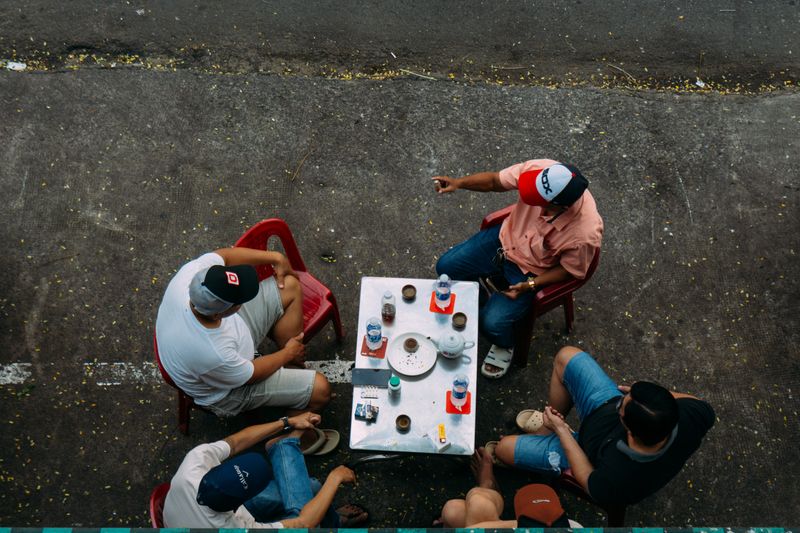
Cheap and short beats expensive and long, because the constraint that actually limits adult meeting is not money but the size of the slot required. Forty minutes in a park, a shared walk to the station or a phone call during a commute all count and all repeat easily. Reduce the number of people involved, since two can meet on a Tuesday and eight cannot meet without a month's notice.
At the kitchen table, accept a lower standard of occasion, because a mediocre coffee that happened is worth more than a superb dinner that did not. The test is simple: could you do this again in a fortnight without any planning, and if not, make it smaller.
Where the big occasion still earns its place
Rare intense events do a specific job, which is marking that a relationship matters enough to spend real time and money on. They are also how groups renew themselves, since a weekend away creates a stock of shared references that lasts for years afterwards.
Between old friends, for friendships already separated by distance, the occasional long visit may be the only realistic format available. The mistake is treating the occasional event as the whole relationship rather than as punctuation inside a more frequent rhythm. A good year has both, and if you can only have one, choose the Tuesdays.
The takeaway
Trade one spectacular evening a year for a dull fortnightly hour and watch which one the friendship actually runs on.
The apology that works is specific, unhurried and free of the word but.
Questions readers ask
We only manage to meet twice a year. Is that a real friendship?
It can be, but it will run on history rather than on current knowledge of each other. Adding one short call a month changes its character entirely.
Why do I feel flat after a long-awaited night out?
Often because the evening was spent summarising rather than talking, and because the anticipation set a standard an ordinary conversation could not meet.