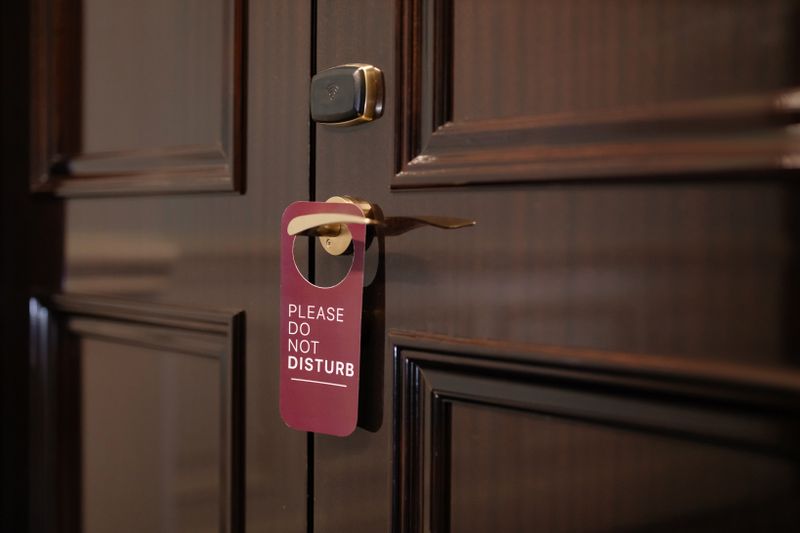
Boundaries
The Relative Who Arrives Without Warning
Unannounced family visits collide with households that now run on scheduling, and the disagreement is usually between two sincere views of what a family door means.

Relatives who turn up without notice are a common source of household friction. The disagreement is generational and cultural rather than a matter of anybody being inconsiderate.
Two honest positions
In one view, family requires no appointment. Needing notice implies being treated as a guest, and being treated as a guest implies not being family.
In the other, a home is a scheduled space, and an unannounced arrival takes over hours that were committed to something else.
Both positions are held sincerely, and neither party usually understands that the other is operating from a different premise rather than being rude.
What changed underneath it
Unannounced visiting worked when people lived close together, worked more predictable hours and had no means of giving notice in advance.
Now that everybody can be contacted instantly, arriving without contacting is legible as a choice, and it is read as one whether or not it was meant that way.
The older habit has not adapted because the person practising it does not experience it as a habit at all.
The cost falls unevenly inside the household
An unannounced visit is usually easier for the relative's own family member than for their partner, who has less standing to shorten it or to say anything afterwards.
The partner then raises it privately, and the conversation becomes about the couple rather than about the visit, which is how a minor logistical matter becomes a recurring argument.
Handling it as a household position rather than one person's objection is what stops that conversion.
Refusal is more expensive than it looks
Turning somebody away at the door after they have travelled is a large act, disproportionate to the inconvenience being avoided.
Which is why most people accept the visit and register the objection later, or not at all, and the pattern therefore continues indefinitely.
The workable interventions are the ones that operate before arrival, not at the door.
What actually adjusts the pattern
Establishing a standing time — a regular afternoon that is reliably available — meets the underlying wish for open access without leaving the whole week exposed.
Shortening rather than refusing also works, since a warm welcome with a stated end is much easier to deliver than a refusal and conveys the same information.
Explaining the reason in practical terms, rather than in terms of preference, avoids the interpretation that the family relationship itself is being downgraded.
What rarely works is hoping the pattern will change on its own, since the visitor has no reason to suspect anything is wrong while every arrival continues to be received warmly.
Questions readers ask
How do I stop myself giving advice?
Ask which they want before responding. It takes four words and removes the guess, which is where the whole problem originates.
What if my friend is about to do something obviously unwise?
Say it once, clearly, and then stop. Repetition converts a friend's opinion into pressure, and pressure tends to entrench the decision rather than change it.