Loneliness & Belonging
Loneliness Rises And Falls Across A Single Day
The feeling is not constant but concentrates at predictable transition points, and knowing where those fall makes it easier to interpret and easier to plan around.

Loneliness is usually described as a state, which suggests something steady. In practice it has a daily shape, and it clusters at particular hours for structural reasons.
Transitions are the exposed points
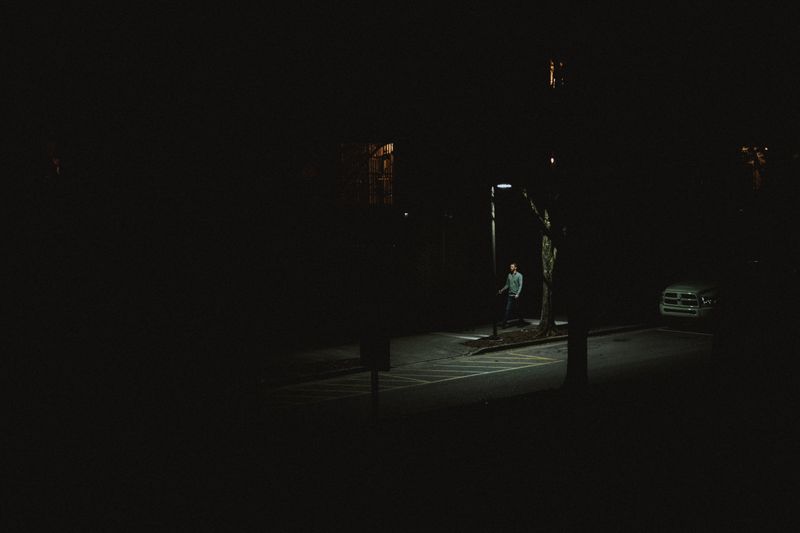
The sharpest moments tend to sit at boundaries: the walk home, the hour after arriving, the gap between finishing work and deciding what the evening is for.
During an activity, attention is occupied and there is no space to assess anything. At a transition, nothing is occupying attention and the assessment happens automatically.
This is why somebody can have a perfectly good day and still find the same twenty minutes difficult, and why the difficulty is not evidence about the day.
Evenings and weekends are visible time
Certain hours are socially marked. Friday evening and Sunday afternoon carry an implied expectation about what people do with them, and being unoccupied then is legible in a way that Tuesday morning is not.
The comparison is also easier to make. Other people's plans are visible at those hours, on the street and on a phone, and visibility supplies the material for a comparison.
The same solitary evening on a Wednesday goes unremarked, which shows that the feeling is partly about the expectation attached to the hour rather than the hour itself.
The early hours are a separate case
Waking at three in the morning produces a distinctive version of the feeling, and it responds poorly to reasoning because there is genuinely no available remedy at that hour.
Nobody can be called, nothing can be arranged, and the mind supplies the worst available interpretation because it has no counter-evidence to work against.
Treating these hours as an unreliable narrator rather than a moment of clarity is more accurate, and a persistent pattern of it is worth mentioning to a doctor.
Why the shape is useful
A feeling that varies predictably can be planned around, whereas a feeling understood as constant cannot. That difference matters practically.
If the difficult window is the hour after getting home, the intervention is something scheduled in that hour rather than a general resolution to be more sociable.
Anchoring the exposed hours to something reliable also breaks the association, and the window often stops registering as difficult once it has a purpose.
What the daily pattern does not mean
A regular difficult hour is not evidence that a social life is inadequate. People with full circles report the same clustering, because the mechanism is about unoccupied attention rather than headcount.
Equally, an absence of difficult hours is not proof of connection, since a busy schedule can occupy attention continuously without supplying anybody to talk to.
The two questions are worth keeping separate, because the answers point at different remedies.
Questions readers ask
Is wanting a lot of time alone unusual?
The amount people need varies widely and there is no correct level. What matters is whether it is chosen and whether you could have company if you wanted it.
Why do I find an empty evening uncomfortable?
Usually because unstructured time is when unattended thoughts arrive. Starting with solitude that has an activity attached makes it considerably easier.