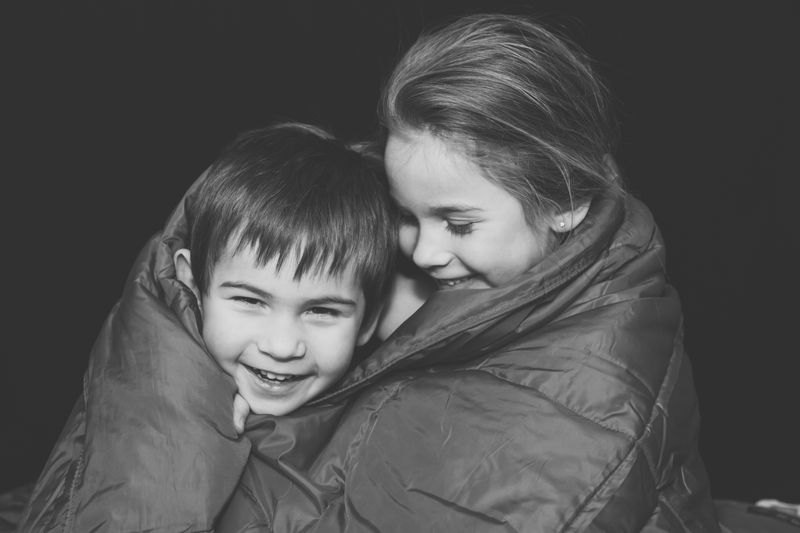
Family Ties
Family gatherings run on rules nobody has ever said out loud
Who sits where, who carves, who is asked about their job and who is not. Understanding the unwritten protocol explains most of what goes wrong at these events.

The options around unwritten rules at family gatherings are set out side by side below, with the conditions that genuinely favour one over the other.
The difference in one place
- Family occasions run on inherited protocols that were never agreed.
- Most flashpoints occur where an unwritten rule has been broken unknowingly.
- Changing a ritual takes several years and is easier done in small increments.
The protocol nobody wrote
Every family has an order of service: what time people arrive, who cooks, who carves, who washes up and who is allowed to sit down. The rules were mostly set by whoever ran the household two generations ago and have been inherited without ever being examined.
New members, partners, in-laws, adult children's friends, encounter the protocol without being told it and breach it within the first hour. Breaches provoke a reaction out of proportion to the offence, because a ritual is being disrupted rather than a rule being broken. Naming the protocol privately, to yourself or to a partner beforehand, makes an enormous difference to how the day feels.
Roles and jobs
Jobs are allocated by role rather than by ability, which is why a professional chef can be asked to lay the table while somebody else ruins the potatoes. The allocation frequently follows gender lines that the family would deny if asked directly and would enforce firmly in practice.
The unglamorous truth is that somebody is always doing considerably more work than everybody else, and that person is usually the one who cannot sit still. Offering to take a job that belongs to somebody else can be read as a criticism rather than as help. The reliable route in is to ask what needs doing rather than to start doing something, which respects the allocation while joining it.
Topics and their status
Every family has subjects that are open, subjects that are closed and subjects that are open only for certain people. Someone's career may be discussed freely while someone else's childlessness, weight, divorce or drinking is carefully unmentioned by everybody. The unmentioned topics are not forgotten; they are held in a state of high pressure and tend to emerge late in the evening.
Newcomers ask the forbidden question innocently and are met with a silence they cannot interpret, which is a well-known feature of first visits. Briefing a partner in advance about which subjects are live is a kindness and takes about five minutes.
Why the same arguments recur
Gatherings reassemble the whole system at once, including alliances and grievances that only exist when everybody is in the same room. Alcohol, tiredness, a fixed timetable and no exit combine to produce conditions under which any long-standing tension is likely to surface.
The argument that recurs each year is usually a proxy for something structural that has never been addressed directly. Because it recurs, everybody has a prepared position, which makes the exchange faster and more damaging each time.
The occasion is a poor venue for resolving any of it, and treating it as such is what turns an awkward day into a rupture.
Changing a ritual
Direct proposals to change how a family does Christmas tend to be received as a rejection of the family rather than of the arrangement. Incremental change works better: arriving later, leaving earlier, hosting one year, introducing one new element that people can enjoy without commentary. Expect several years, since rituals encode who matters and altering them redistributes something that nobody wants redistributed.
The strongest lever is usually taking on the work, because whoever cooks acquires considerable influence over the shape of the day. Alternating hosts between households is the single change that most reliably improves a difficult annual gathering.
Deciding not to go
Attendance at family occasions is a choice, though families rarely present it as one, and declining will be treated as a statement. It is worth being clear with yourself about whether you are avoiding a difficult day or protecting yourself from genuine harm. Going for a shorter period, staying elsewhere or arriving with your own transport gives you options that reduce the need to decline entirely.
Where a relative's behaviour makes an occasion unsafe or seriously distressing, not attending is a reasonable decision that requires no elaborate justification. If you are unsure, describing the specifics to somebody outside the family usually clarifies it faster than another year of testing it.
Side by side
| Consideration | What it means in practice |
|---|---|
| The protocol nobody wrote | Family occasions run on inherited protocols that were never agreed. |
| Roles and jobs | Most flashpoints occur where an unwritten rule has been broken unknowingly. |
| Topics and their status | Changing a ritual takes several years and is easier done in small increments. |
The takeaway
Learn the unwritten timetable before you try to change it, because most of the friction is people breaking rules they were never told.
The apology that works is specific, unhurried and free of the word but.
Questions readers ask
Why does the same argument happen every year?
Because the occasion reassembles the whole system, everyone has a rehearsed position, and the underlying issue is never addressed anywhere else.
How do I prepare a partner for their first family Christmas?
Tell them the protocol and the closed subjects in advance, agree a signal and an exit time, and do not ask them to absorb a difficult relative alone.